
Gyanbachi Mekh | June 10 | Bhairavnath Wakale
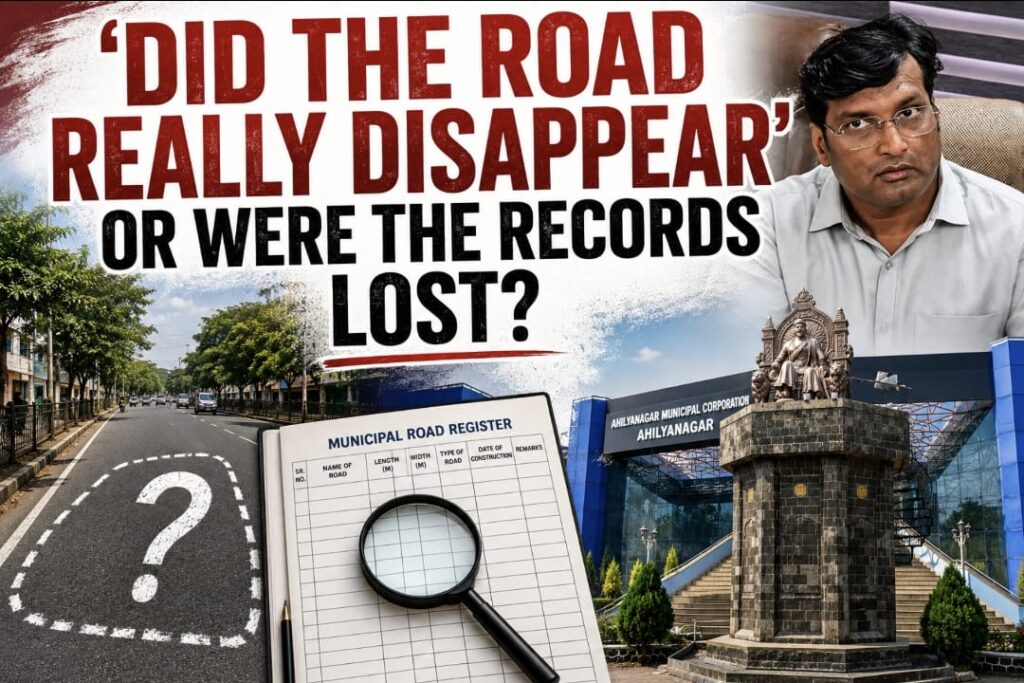
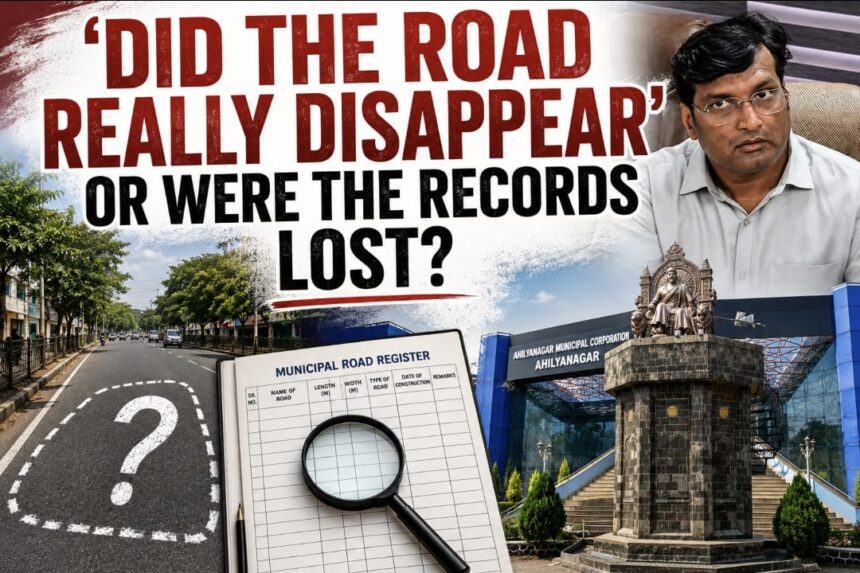
(Crime) A recent controversy in Ahilyanagar saw some corporators alleging that a road had been “stolen,” criticizing the Municipal Corporation administration over questions regarding the existence, ownership, and official records of the road stretching from Ekvira Chowk to Tapovan Road in Savedi. The incident has raised an important question among citizens: Does the Municipal Corporation maintain an official register of roads under its jurisdiction, and what information does it contain?
(Crime) In practice, just as Gram Panchayats are required to maintain records of roads under their control, Municipal Corporations are also expected to keep official records of roads owned and managed by them. The construction, maintenance, and administration of city roads are among the corporation’s fundamental responsibilities.
(Crime) The issue is not that a road is literally “stolen.” Rather, disputes arise when road records are not updated, when roads shown in approved layouts disappear in reality, when ownership details are unclear, when maps are unavailable, or when there is confusion regarding which authority is responsible for a particular road. Such situations often lead to public controversy and administrative disputes.
Municipal Corporations typically maintain road registers, road inventories, asset registers, or digital GIS maps. These records generally include details such as the road’s name, length, width, category, construction specifications, maintenance history, ownership status, and the authority responsible for upkeep. Such records play a crucial role in urban planning and governance.
Citizens frequently lodge complaints regarding potholes, encroachments, blocked roads, or development works. However, many are unaware whether a road falls under the Municipal Corporation, the Public Works Department (PWD), the National Highways Authority, or another agency. As a result, complaints are often directed to the wrong authority. This highlights the need for greater public access to official road records.
Under the Right to Information (RTI) Act, any citizen can seek details about roads in their locality. Information regarding a road’s length, width, approved layout plan, expenditure details, maintenance records, and ownership status can be obtained through official channels.
In a rapidly expanding city like Ahilyanagar, where new areas are continuously being incorporated and development projects are increasing, keeping road records updated is essential. Failure to do so can lead to ownership disputes, encroachments, inconsistencies in development plans, and questions regarding the use of public funds.
While the slogan “the road has been stolen” may have attracted public attention, it has also highlighted larger concerns about transparency, record-keeping, and public access to information regarding civic infrastructure. Rather than viewing the matter solely through a political lens, it should be seen as an issue of effective public asset management.
The article argues that the Municipal Corporation should make its updated road registers, digital maps, and property records publicly accessible through its website. Citizens, too, should take an active interest in understanding the status of public roads in their neighborhoods and participate in the city’s development process.
Ultimately, roads do not get stolen – but when records, accountability, and transparency disappear, the entire city suffers.