

Culture Varta | B. D. Shelar
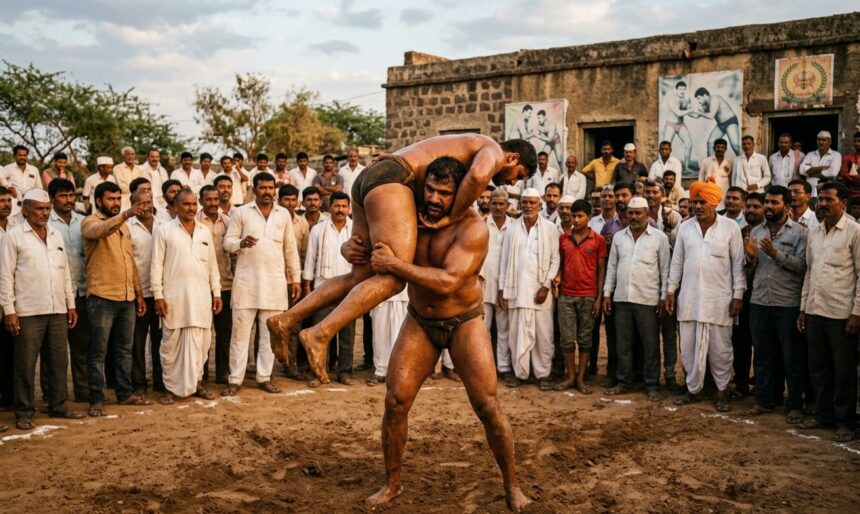
(Culture) The rugged, powerful, and authentically Maharashtrian sport that carries forward the legacy of Shahu Maharaj is traditional red-soil wrestling (Lal Mati Kushti). A blend of sweat, soil, strength, agility, determination, and integrity, wrestling on Maharashtra’s red earth represents a proud cultural tradition. On the occasion of World Wrestling Day, heartfelt greetings are extended to all wrestling coaches, wrestlers, and enthusiasts.
(Culture) Ahmednagar district has inherited a rich and proud wrestling legacy. Powerful wrestlers such as Maharashtra Kesari awardee Gulab Barde from Rahuri, Up-Maharashtra Kesari Chhaburao Ranboke from Ahmednagar city, and Up-Maharashtra Kesari Attar helped establish the district’s wrestling reputation across Maharashtra. Especially in southern Ahmednagar, wrestling is not merely a sport but a matter of culture, identity, and tradition.
(Culture) Around Ahmednagar city, Chhaburao Ranboke established several wrestling academies and trained numerous wrestlers who later carried the district’s wrestling legacy forward. Similarly, the intense and thrilling wrestling bouts of Attar were widely admired during that era.
The saying, “It is fine if a son does not become an engineer, but he must go to a Kolhapur wrestling academy and return as a wrestler,” still reflects the sentiment of many households. Even today, the title “Pailwan” (wrestler) proudly appears before the names of many local youth leaders on village banners.
In 1986, Gulab Barde became Maharashtra Kesari and turned into a youth icon. Crowds from nearby villages flocked to fairs and festivals to witness his immense strength, lightning agility, and aggressive techniques. The writer recalls traveling long distances during school days just to watch his wrestling matches.
After winning the Maharashtra Kesari title, Gulab Barde earned tremendous respect and stature in wrestling circles. Many wrestlers of Up-Maharashtra Kesari level reportedly hesitated to challenge him out of admiration or recognition of his strength. At several village fairs, he would receive a “bye” in competitions, yet he still entered the arena, saluted spectators with his famous Ulti Bajrang Udi (reverse Bajrang leap), and was welcomed with thunderous applause and chants of “Gulab Barde!”
Later, in 1988, a historic wrestling bout between Hind Kesari Kartar Singh and Gulab Barde in Indore came to be regarded as one of India’s finest wrestling contests. Despite Kartar Singh’s immense power and Asian-level achievements, Gulab Barde’s fierce resistance showcased the strength of Maharashtra’s soil-born wrestlers to the nation.
Today, wrestlers such as current Hind Kesari and Maharashtra Kesari Sikandar Shaikh continue this legacy of strength, agility, and aggressive wrestling, ensuring Maharashtra’s traditional wrestling culture remains vibrant among the new generation.